Languages
Tuesday, September 22, 2026



News and Views from the Global South
Gender
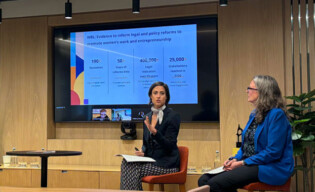
Family Law Reforms Are Needed to Advance Gender Equality
On September 16, at the lead-up to the 81st UN General Assembly, Equality in Family Law (GCEFL), Equality Now, TrustLaw, and the World Bank Group convened in New York City for the event titled The Gender Equality Dividend: Investing in Women’s Economic Prosperity Through Family Law Reform. Hosted by APCO, the event introduced new data on barriers to family law reform and highlighted strategies to help the international community maximize women’s economic participation.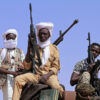
Sudan: Blood on Foreign Powers’ Hands
Sudan’s civil war grinds on. It’s close to three and a half years since the Sudanese Armed Forces (SAF) and the Rapid Support Forces (RSF) militia began their battle for supremacy, and the two forces and their allies continue to slaughter civilians with impunity. As a recent UN report makes clear, the killing is enabled by numerous foreign powers that continue to supply weapons, personnel and logistical support. They have made a civil conflict their proxy war, and their self-interest is sustaining the killing.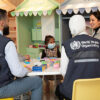
WHO Launches New Global Health Strategy for Childhood Cancer Medications
When a child is diagnosed with cancer, their chances of survival should not depend on where they live, yet according to the WHO, more than 80 percent of children with cancer in high-income countries are cured, compared with fewer than 30 percent in many low- and middle-income countries (LMICs).
What it Means to be ‘Too Old’ and a Woman: Systemic Gendered Ageism and Loss of Belonging
Chung Sun-cha started collecting cardboard, plastic, and other recycling materials off the streets of Incheon, South Korea, to sell when she was in her mid-70s. She is now 87. Without an adequate pension, Chung worked six days a week, sometimes seven, in the wind, rain, and snow until she fell and broke her arm while working in 2025. “I couldn’t find any other work because of my age,” she said.
One Man’s Quest to End Female Genital Mutilation (FGM) in Mali
In Mali, an estimated nine out of ten women and girls have undergone female genital mutilation (FGM). And for years, Sidi Haidara, a father and recognized leader in his community, believed the practice was simply part of life.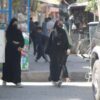
Afghan Men Quietly Resist Taliban Ban on Girls’ Education
Many wonder why men in Afghanistan do not protest when women’s rights are trampled upon. In reality, many are rebelling behind the scenes, for instance, by helping their daughters get an education.
Lawmakers Need to Grapple With the ‘Human Story’ of the Aged, Youth, Women and Girls when Making Policy
"As parliamentarians, we should understand that behind every demographic indicator is a human story,” Kamikawa Yoko, MP Japan and Chair of AFPPD, reminded lawmakers in her opening address to the Asian Forum of Parliamentarians on Population and Development (AFPPD) annual conference held in Kuala Lumpur, Malaysia.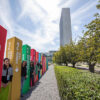
Development Goals Falter as Civil Society Is Shut Out
When the UN High-level Political Forum on Sustainable Development (HLPF) ended in New York in July, it took two recorded votes for states to pass a ministerial declaration that, until recently, would have been adopted without controversy. Uruguay, speaking for the Group of 77 developing countries plus China, pushed through the deletion of a reference to the agreement reached at the COP28 climate summit. Israel forced a vote on a paragraph about self-determination for people under occupation. Russia dissociated itself from the passage on peace and security. The wrangling revealed the extent to which the consensus that in 2015 saw all 193 UN states agree the Sustainable Development Goals (SDGs) – a common blueprint to end poverty, tackle climate change and build accountable institutions by 2030 – has been eroded.
LIECHTENSTEIN: ‘We Have One of the Strictest Abortion Bans in Europe’
CIVICUS discusses struggles for abortion rights in Liechtenstein with Gabriella Alvarez-Hummel, a journalist and reproductive rights activist who works with Fristenlösung für Liechtenstein, an organisation that campaigns for the introduction of a legal time-limit abortion model.
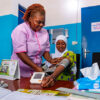
Midwives: The Workforce That Will Determine Maternal and Newborn Survival and Africa’s Future
Tonight, thousands of women across Africa will give birth. Whether they survive to see daylight will largely depend on where they live, how quickly they reach care, and whether the health system around them is ready to respond.
WHO Announces New Ebola Vaccine Guidelines for the DRC
While Uganda announced the end of its Ebola outbreak last week, the Democratic Republic of Congo (DRC) continues to battle its deadliest Ebola outbreak to date. As of September 1st, there have been over 6,000 cases, including over 3,000 deaths, with Ituri standing as the most affected province.
UNICEF Report Underscores Rising Rates of Tech-Facilitated Sexual Abuse Targeting Children
A new report from UNICEF finds that approximately 1 in 5 of all children surveyed reported facing tech-facilitated sexual abuse or exploitation in a single year.
Families in Desperate Search for Victims of the ‘Himalayan Tsunami’ in Nepal
On Sunday afternoon, Mingma Tamang, 29, rushed into the TU Teaching Hospital’s emergency ward, where a rescue team had just brought in an injured person in the Rasuwa flash flood – but she soon left grim-faced.
‘I am one who dies for life, not one who lives for death’ – Kurdish Political Prisoner Pakhshan Azizi
In 2024, Kurdish social worker Pakhshan Azizi was sentenced to death. She remains incarcerated in Evin Prison, Tehran, Iran. This is her story ...
Family Planning and Population Dynamics Are Key to Water Security
This week is World Water Week, the annual conference of governments, business, and civil society on building a water-secure future as global population, climate disruptions, and water demand increase. In Washington, it’s also Water Resources Development Act season, when every two years the US Congress reauthorizes the legilslation that funds US drinking water, wastewater systems, and flood risk management projects.
Lailuma Built Opportunities for Afghan Women – Then She Was Killed
Afghanistan has seen a number of unexplained murders in recent months. One of the latest victims is Lailuma, the wife of well-known local singer Salam Maftoon and a community activist.
UNAIDS Framework Pushes for the Protection and Integration of HIV Care
As the global HIV response shifts toward sustainable, nationally led, and rights-based care, a new UNAIDS framework published this week argues that integration must start with a country's readiness.
How the Taliban Hunt Women in Afghanistan
FIVE years after the Taliban returned to power, Fawzia Koofi, the former Deputy Speaker of the Afghan Parliament, denounces what she describes as “gender apartheid.”
Nairobi Biodiversity Talks Set the Stage for Key COP17 Decisions
Despite record participation in global biodiversity reporting and planning processes, countries remain off track to meet the world's 2030 biodiversity goals, according to discussions that concluded this month at two key meetings under the Convention on Biological Diversity (CBD).
How Global Aid Cuts are Undermining Women-Led Humanitarian Response in Sudan
Women-led and women’s rights organizations (WLOs) in humanitarian settings are collapsing amidst a complicated predicament in which needs are surging and international support is dwindling.
PARAGUAY: ‘Transparency Should Strengthen Democracy, Not Turn Criticism of Those in Power into a Cause for Suspicion’
CIVICUS discusses the challenges posed by Paraguay’s ‘anti-NGO law’ with Hugo González, executive director of the Paraguayan Network of LGBTQ+ Artists (REPAR+), a civil society organisation (CSO) that promotes the rights of LGBTQI+ people, which has joined the constitutional challenge against this law.
Next Page »


Women make up half the world's population, but don't nearly share half of the world's wealth, well-being and opportunity. Two-thirds of the world poor are women, disproportionally exposing women to precarious living conditions, disease and unmitigated natural disasters. The media, meanwhile, remains a male-dominated sector in much of the world, contributing to women's voices lacking a crucial amplifier to put their concerns on political agendas and unleash the development potential of their ingenuity. Rather than then stereotypical victims of local and global forces, women are also organizer, innovators, conservators and community builders. These are some of their stories.

The Week with IPS

NEXT STOP - SDGs
Tracking global progress towards a sustainable world
Tracking global progress towards a sustainable world
